
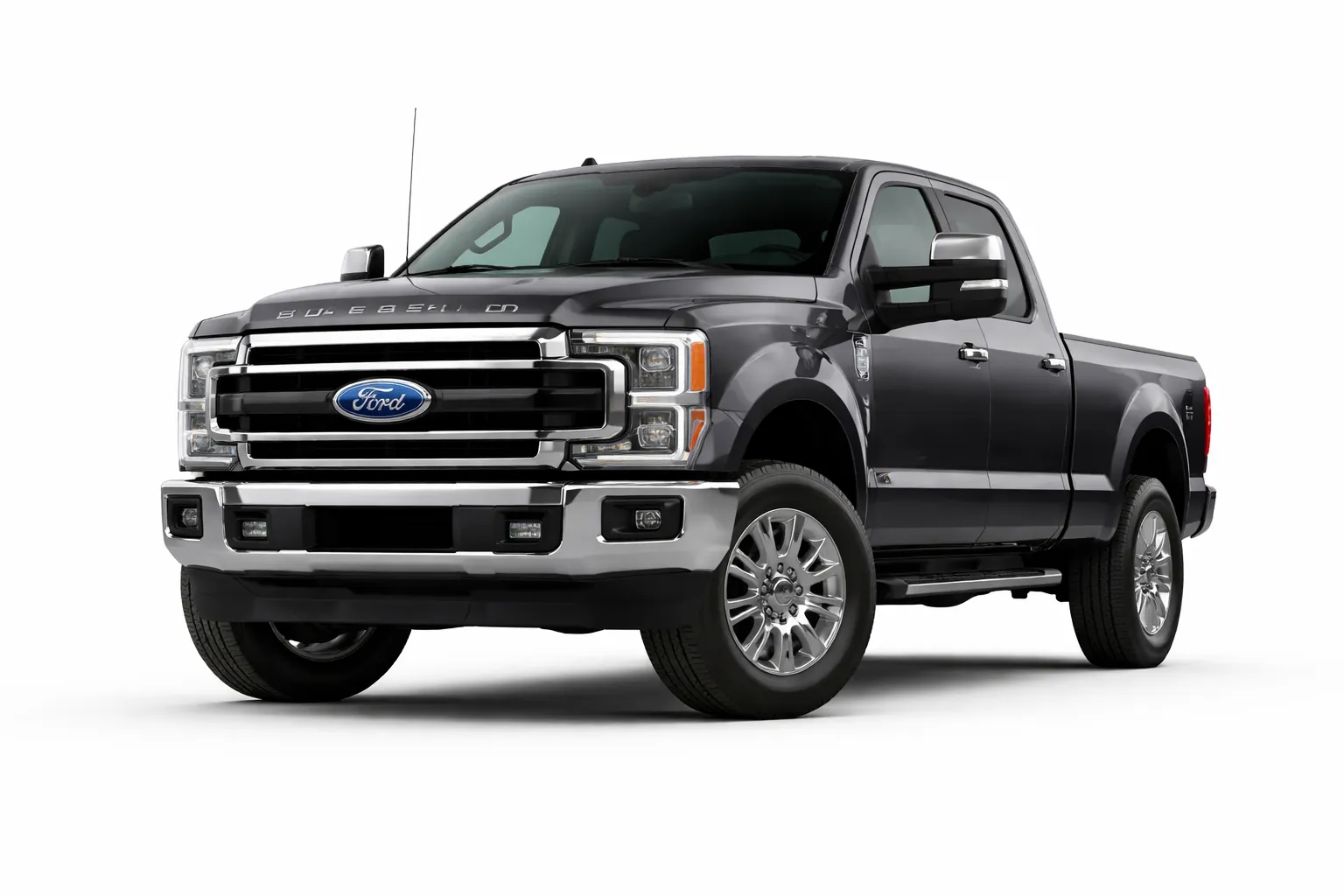
The Ford Super Duty has a simple reputation: big, strong, built for work. That’s only half true. These trucks are built to handle heavy loads, but they also come with expensive failure points that don’t show up on a quick test drive.
You’re not buying a daily commuter here. You’re buying a machine that was likely used for towing, hauling, or jobsite work. That history matters more than mileage, more than trim, more than color. A clean Super Duty can run past 300,000 miles. A bad one will cost you five figures in repairs before 150,000.
No gray area.
what “super duty” actually means
Super Duty covers three main models:
- F-250
- F-350
- F-450
All built by Ford Motor Company. Same general platform, but different capability levels.
F-250 is the entry point.
F-350 adds payload and towing capacity.
F-450 is built for serious towing, often used for commercial work.
These trucks use:
- Heavy-duty frames
- Solid rear axles
- Larger brakes
- Bigger transmissions
That strength comes with cost. Everything is bigger, heavier, and more expensive to repair.
how these trucks are actually used
Most Super Duty trucks are not lightly driven.
Common use cases:
- Towing trailers (5,000–20,000 lbs)
- Hauling equipment
- Construction and farm work
Even if a truck looks clean, check the details. Hitch wear, bed scratches, aftermarket brake controllers—these tell the real story.
A truck with 80,000 miles of heavy towing is more worn than a 150,000-mile commuter truck.
engine options: where the real decision happens
6.2l gas v8 (2011–2022)
This is the simple option.
Specs:
- 385 hp
- 430 lb-ft torque
Pros:
- Reliable
- Lower repair costs
- No turbo or diesel emissions complexity
Cons:
- Poor fuel economy (10–15 mpg)
- Weak compared to diesel under heavy load
This engine doesn’t excite anyone, but it works. It’s the safest long-term bet if you want predictable ownership costs.
7.3l gas v8 (2020+)
Ford brought back a big gas engine.
Specs:
- 430 hp
- 475 lb-ft torque
Pros:
- Strong power for gas
- Simpler than diesel
- Good towing performance
Cons:
- Fuel economy still poor
- Newer, less long-term data
This engine closes the gap between gas and diesel performance without diesel maintenance costs.
6.7l power stroke diesel (2011+)
This is what most buyers want.
Specs:
- Up to 475 hp / 1,050 lb-ft torque (varies by year)
Pros:
- Massive torque
- Best for towing
- Long engine life when maintained
Cons:
- Expensive repairs
- Emissions system failures
- Higher maintenance costs
This engine can run 300,000+ miles. But when something fails, it’s not cheap.
older diesels (avoid or inspect heavily)
6.0l power stroke (2003–2007)
Known problems:
- EGR failures
- Head gasket issues
- Oil cooler failures
Fixing these can cost $5,000–$10,000.
6.4l power stroke (2008–2010)
Worse than the 6.0L in many ways.
Issues:
- Fuel dilution
- Turbo failures
- DPF problems
Many owners avoid this engine entirely.
transmissions: expensive when they fail
Super Duty transmissions handle serious torque. That doesn’t make them immune to failure.
6r140 automatic
Used in many diesel models.
Pros:
- Strong
- Handles towing well
Cons:
- Expensive rebuilds ($4,000–$6,000)
10-speed automatic (2020+)
Better efficiency and smoother shifts.
Still early in long-term reliability, but fewer complaints than older designs.
towing and payload: where these trucks justify themselves
This is the reason to buy one.
Typical numbers:
- F-250 towing: 12,000–20,000 lbs
- F-350 towing: up to 30,000+ lbs
- Payload: 3,000–7,000 lbs
These aren’t marketing numbers. These trucks actually handle this work.
But here’s the trade-off:
If you don’t need that capacity, you’re carrying unnecessary cost.
Driving an F-250 to haul groceries is like using a semi for commuting. It works, but it’s inefficient.
ride quality and daily driving reality
These trucks are not comfortable daily drivers.
Issues:
- Stiff suspension
- Large turning radius
- Difficult parking
Empty ride quality is harsh. Load the bed, it improves.
Example: driving an F-350 daily in a city like Dallas. Parking garages become a problem. Tight spaces become stressful. This isn’t a casual inconvenience. It’s constant.
fuel economy: don’t ignore it
Gas engines:
- 10–15 mpg
Diesel:
- 15–20 mpg (better on highway)
Fuel cost adds up fast.
A driver covering 15,000 miles per year:
- Gas: ~$4,000–$5,500 annually
- Diesel: ~$3,500–$5,000 depending on fuel prices
Savings exist with diesel, but repairs can erase them quickly.
maintenance and repair costs
routine maintenance
- Oil changes (gas): $60–$120
- Oil changes (diesel): $150–$300
- Tires: $1,000–$2,000
common repairs
- Turbo replacement: $2,000–$4,000
- Injector replacement: $2,000–$5,000
- Transmission rebuild: $4,000–$6,000
- EGR system repairs: $1,500–$3,000
These are not rare events. They’re part of ownership over time.
reliability: depends on the engine and owner
Gas engines are more predictable. Fewer high-cost failures.
Diesel engines last longer but cost more to maintain.
Neglected maintenance kills these trucks faster than mileage.
A well-maintained diesel with 200,000 miles is safer than a neglected one at 90,000.
real-world example
Two trucks, same year.
Truck A:
- 2015 F-250
- 6.2L gas
- 140,000 miles
- Used for light work
Result:
- Minimal issues
- Routine maintenance only
Truck B:
- 2015 F-250
- 6.7L diesel
- 120,000 miles
- Heavy towing use
Result:
- Turbo failure at 130,000 miles
- Repair cost: $3,200
Same truck class. Different outcomes based on use.
resale value
Super Duty trucks hold value well, especially diesel models.
Example:
- 2016 F-250 diesel, 120k miles: ~$35,000
- 2016 F-250 gas, 120k miles: ~$25,000
Diesel commands higher resale due to towing demand.
who should actually buy one
You benefit if:
- You tow heavy loads regularly
- You haul equipment
- You need durability under stress
You don’t benefit if:
- You commute daily
- You rarely tow
- You want low ownership cost
the trade-offs spelled out
Pros:
- High towing capacity
- Durable frames and components
- Strong resale value
Cons:
- Expensive repairs
- Poor fuel economy
- Harsh daily driving experience
what buyers get wrong
They buy diesel without needing it.
Diesel costs more to buy and maintain. Without regular towing, it’s wasted money.
They ignore maintenance history.
A truck with missing service records is a risk, no matter how clean it looks.
They underestimate repair costs.
This isn’t a half-ton truck. Everything costs more.
stripped-down conclusion without filler
The Ford Super Duty is worth buying used if you actually use its capability.
If you don’t tow heavy loads or haul regularly, it’s an expensive, inefficient choice.
The right Super Duty lasts a long time and does serious work. The wrong one drains money quickly.

Comments (0)
No comments yet.