
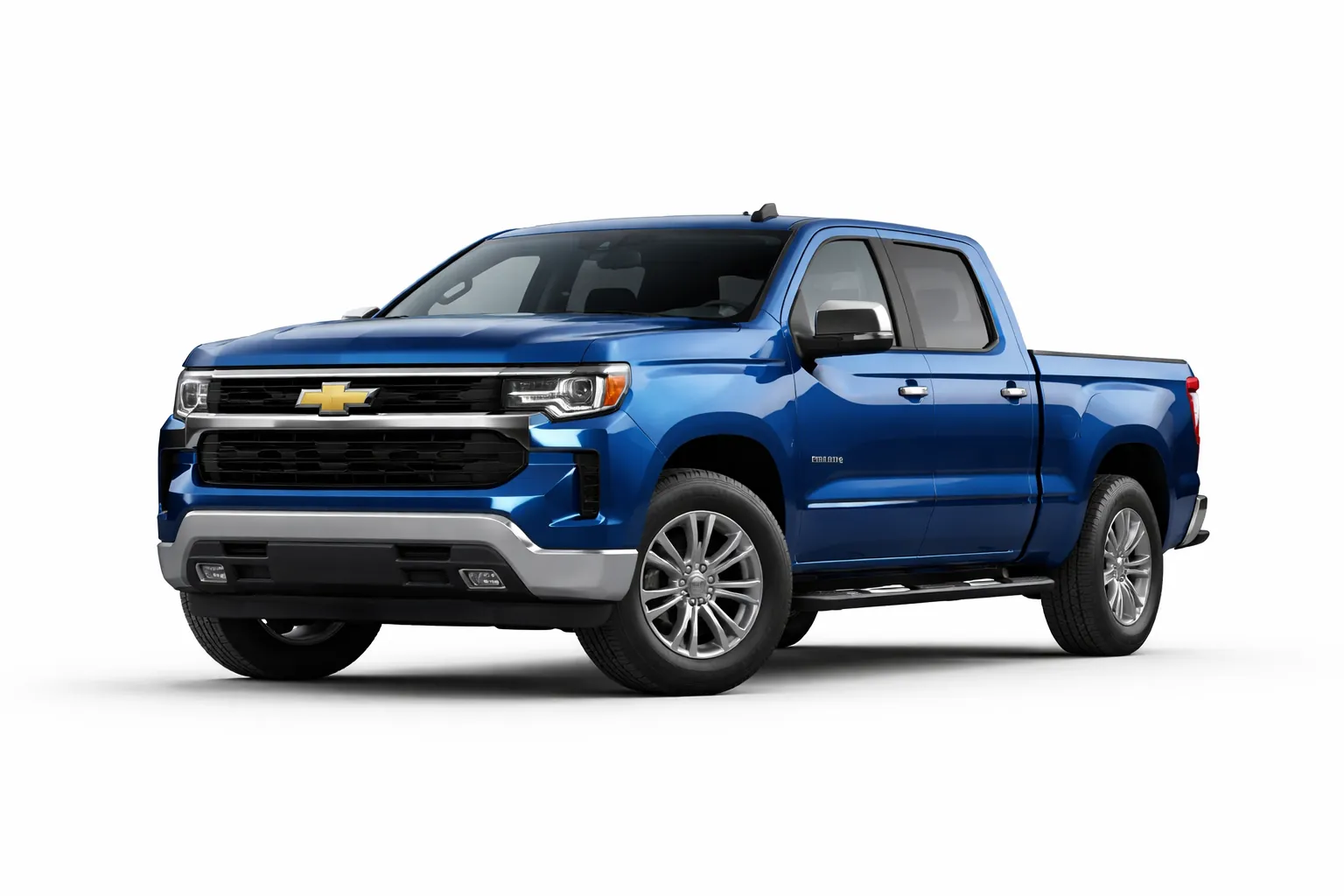
The Chevrolet Silverado 1500 sells on reputation. Tough image, big sales numbers, familiar badge from Chevrolet. That’s the surface. Underneath, it’s a mixed bag of solid drivetrains, inconsistent interiors, and a long list of year-to-year quirks that will cost you if you don’t pay attention.
You don’t buy one of these on vibes. You buy it based on engine, model year, and how it was used. A clean, well-maintained Silverado can run past 200,000 miles. A neglected one will nickel-and-dime you before 120,000. Same truck. Different outcome.
the silverado’s real appeal
Strip away the branding. The Silverado 1500 exists because it does three things well enough for most people:
- It tows without drama
- It fits a crew of adults
- It has simple, proven V8 options
That’s it. That’s why it’s everywhere from job sites in Texas to suburban driveways in Ohio.
Between 2014 and 2024, Chevrolet sold millions of these. Parts are everywhere. Any independent shop can work on one. Insurance is predictable. Resale stays steady if the truck isn’t abused.
But volume hides problems. When a truck sells in huge numbers, weak points scale with it.
model years that matter (and the ones to skip)
2007–2013: cheap entry, known issues
This generation is cheap for a reason.
Engines like the 5.3L V8 (LMG, LC9) are common. They’re capable, but they come with Active Fuel Management (AFM). That system shuts down cylinders to save fuel. It also wears lifters. When lifters fail, you’re looking at a $2,500–$4,000 repair depending on labor rates.
Transmissions? The 4L60E shows up everywhere. It’s not strong. Expect rebuilds around 120,000–160,000 miles if the truck towed regularly.
Interior quality is basic. Plastics scratch easily. Seat foam collapses.
You buy this generation if the price is low enough to justify repairs. Otherwise, skip it.
2014–2018: better structure, same AFM headache
This is where the Silverado starts to feel modern. New frame, improved ride, quieter cabin.
Engine lineup:
- 4.3L V6 (LV3)
- 5.3L V8 (L83)
- 6.2L V8 (L86)
The 5.3L and 6.2L still use AFM. Same lifter issues. Some trucks never have problems. Others fail early. There’s no consistent pattern, which makes it worse.
Transmission choices:
- 6-speed (6L80): generally reliable
- 8-speed (8L90): rough shifting, shudder issues
The 8-speed is the problem child. Owners report harsh 1–2 shifts and vibration at highway speeds. Fluid flushes sometimes help. Sometimes they don’t.
A real example: a 2017 Silverado LT in Arizona, 82,000 miles, maintained at a dealership. Owner reports torque converter shudder at 65 mph. Dealer replaces fluid twice. Issue comes back. Full transmission replacement at $4,200. No warranty.
Interior still lags behind competitors. Hard plastics. Basic infotainment. It works, but it feels cheap next to a Ford F-150 from the same years.
This generation is worth buying if:
- It has the 6-speed transmission
- Maintenance records are clean
- No lifter noise on cold start
2019–2021: redesign with growing pains
Full redesign. New platform. Lighter frame. More tech.
Engines:
- 2.7L turbo four-cylinder
- 5.3L V8 (updated)
- 6.2L V8
- 3.0L Duramax diesel
The 2.7L turbo looks odd on paper. Small engine in a full-size truck. It actually pulls well for daily driving. But long-term durability is still debated. It’s not as proven as the V8s.
The 5.3L and 6.2L now use Dynamic Fuel Management (DFM), a more complex version of AFM. Still cylinder deactivation. Still lifter failures reported. Same story, different name.
Transmission:
- 8-speed and 10-speed automatics
The 10-speed (co-developed with Ford Motor Company) is smoother than the 8-speed. Not perfect, but better.
Interior is a weak point. Chevrolet cut corners. Base trims feel stripped. Even mid-level trims don’t match competitors in materials or layout.
Anecdote: 2020 Silverado RST, 40,000 miles, Florida. Owner complains about interior rattles from the dash and door panels. Dealer adds foam padding. Noise returns within months.
You buy this generation for:
- Diesel option (3.0L Duramax is efficient, 30 mpg highway in real-world driving)
- Improved ride quality
You accept:
- Interior disappointment
- Ongoing lifter concerns
2022–2024: interior fix, mechanical carryover
Chevrolet finally fixed the interior. Bigger screens, better layout, materials that don’t feel like rental-grade plastic.
Mechanically, not much changed.
Engines still include:
- 2.7L turbo (now branded TurboMax)
- 5.3L V8
- 6.2L V8
- 3.0L Duramax
The lifter issue hasn’t disappeared. Reports still exist, especially on the 5.3L. Less frequent than earlier years, but not gone.
Pricing is high. A lightly used 2023 Silverado LT can still sit above $45,000 depending on mileage and region. That’s not “cheap used truck” territory anymore.
You’re paying for updated tech and comfort. Not improved mechanical simplicity.
engines: what actually holds up
5.3l v8
This is the default Silverado engine. It’s everywhere.
Pros:
- Strong low-end torque
- Easy to service
- Widely available parts
Cons:
- AFM/DFM lifter failures
- Oil consumption in some units
- Mediocre fuel economy (17–21 mpg combined)
If maintained well, it can run 200,000 miles. But lifter failure risk hangs over it. Some owners install AFM delete kits. That’s another $1,500–$3,000 depending on parts and labor.
6.2l v8
More power. 420 horsepower in newer models.
Pros:
- Strong acceleration
- Better towing performance
- Feels like a proper V8
Cons:
- Premium fuel recommended
- Same lifter issues
- Higher repair costs
You buy this if you actually tow or want performance. Otherwise, it’s overkill.
4.3l v6
Older base engine.
Pros:
- Simple
- Reliable compared to AFM V8s
- Lower upfront cost
Cons:
- Weak towing
- Feels underpowered in a full-size truck
It works for light-duty use. Not much else.
2.7l turbo
Newer option.
Pros:
- Strong torque for its size
- Decent fuel economy (20–23 mpg combined)
Cons:
- Long-term durability still uncertain
- Turbo adds complexity
It’s not a bad engine. It’s just unproven compared to the V8s.
3.0l duramax diesel
Quiet, efficient, underrated.
Pros:
- 27–30 mpg highway
- Strong torque for towing
- Smooth operation
Cons:
- Higher maintenance costs
- Diesel fuel price variability
- Emissions system complexity
This is the best long-distance engine in the Silverado lineup. But repairs get expensive if emissions components fail.
transmissions: where things go wrong
This is where a lot of Silverado owners get burned.
6-speed automatic (6l80)
Reliable. Not exciting. Gets the job done.
Seen in many 2014–2018 trucks. Handles daily driving and moderate towing without major issues.
8-speed automatic (8l90)
Problematic.
Common issues:
- Harsh shifting
- Torque converter shudder
- Hesitation at low speeds
Fixes range from fluid changes to full replacements. Costs add up fast.
10-speed automatic
Better than the 8-speed.
Smoother shifts. Fewer complaints. Still not perfect, but acceptable.
towing and payload reality
Marketing numbers look good. Real-world numbers matter more.
Typical towing capacity:
- 5.3L V8: 9,000–11,000 lbs
- 6.2L V8: up to 13,300 lbs
- 3.0L diesel: around 9,500 lbs
Payload:
- Usually 1,700–2,200 lbs depending on configuration
Here’s the problem. Most used trucks were not treated gently.
A Silverado that spent five years towing a 7,000-pound trailer every weekend is not the same as one used for commuting. Suspension wear, transmission heat, brake stress—it all adds up.
Look under the truck. Check hitch wear. Look for aftermarket brake controllers. Those tell you how the truck was used.
interior and tech: inconsistent at best
This is where the Silverado falls behind competitors.
Pre-2022 interiors feel outdated. Hard plastics dominate. Infotainment systems are functional but not impressive.
Post-2022 trucks improve:
- Larger touchscreens (up to 13.4 inches)
- Digital gauge clusters
- Better layout
Still, even newer models don’t feel premium unless you step into high trims like High Country.
A common complaint: seat comfort. Some owners report lower back fatigue on long drives. Not universal, but frequent enough to note.
maintenance costs and ownership reality
Owning a Silverado isn’t cheap, but it’s predictable.
Typical annual maintenance:
- Oil changes: $60–$120
- Brake pads: $300–$600
- Tires: $800–$1,200
Common repairs:
- Lifter replacement: $2,500–$4,000
- Transmission rebuild: $3,000–$5,000
- AC compressor: $800–$1,500
Parts are easy to find. Labor is straightforward. No exotic engineering here.
The real cost comes from ignoring early symptoms. Tick noise from the engine? That’s not “normal truck sound.” That’s a warning.
known problems that keep showing up
lifter failure (afm/dfm)
This is the biggest issue.
Symptoms:
- Ticking noise
- Misfires
- Check engine light
Ignore it and it gets worse. Fast.
transmission shudder
Mostly 8-speed units.
Feels like driving over rumble strips at steady speeds.
electrical glitches
Infotainment freezes. Backup cameras fail. Random warning lights.
Usually not catastrophic, but annoying.
rust (older models)
Common in northern climates.
Check:
- Frame rails
- Wheel wells
- Underbody
Rust kills resale value quickly.
resale and depreciation
Silverados hold value reasonably well. Not exceptional, but stable.
Example:
- 2018 Silverado LT, 80,000 miles
- Original MSRP: ~$45,000
- Current value: $24,000–$28,000
Condition and history matter more than trim level.
Diesel models tend to hold value better due to fuel efficiency.
real-world example: two trucks, same year, different outcomes
Truck A:
- 2016 Silverado 1500 LT
- 5.3L V8, 6-speed
- 95,000 miles
- Personal use, no towing
Result: Minimal issues. Regular maintenance. Still running strong at 150,000 miles.
Truck B:
- 2016 Silverado 1500 LT
- Same engine and transmission
- 90,000 miles
- Used for towing landscaping equipment
Result: Transmission rebuild at 110,000 miles. Suspension components worn early. Higher overall cost.
Same truck on paper. Completely different ownership experience.
what actually matters when buying one
Forget trim names. Focus on these:
- Engine type
- Transmission type
- Maintenance history
- Previous use (towing vs daily driving)
A base Work Truck with a clean history is better than a loaded LTZ with problems.
Mileage matters less than maintenance. A well-kept 120,000-mile truck is safer than a neglected 60,000-mile one.
the trade-offs nobody tells you
You don’t get everything.
You want reliability? You deal with outdated tech.
You want modern features? You accept complexity and higher repair risk.
You want power? You pay for fuel and maintenance.
There’s no perfect Silverado. Only versions that make sense for specific use cases.
bottom line without the fluff
The Silverado 1500 is not special. It’s common, which makes it practical. It works if you choose carefully.
Best bets:
- 2014–2018 with 6-speed transmission
- 2022+ for improved interior (accept higher price)
- 3.0L diesel for efficiency
Watch out for:
- 8-speed transmission models
- Any engine with lifter noise
- Trucks with heavy towing history
You don’t buy this truck blindly. You inspect it like it already has problems. Because statistically, some of them do.

Comments (0)
No comments yet.